



What actually happens after you sell your software business?
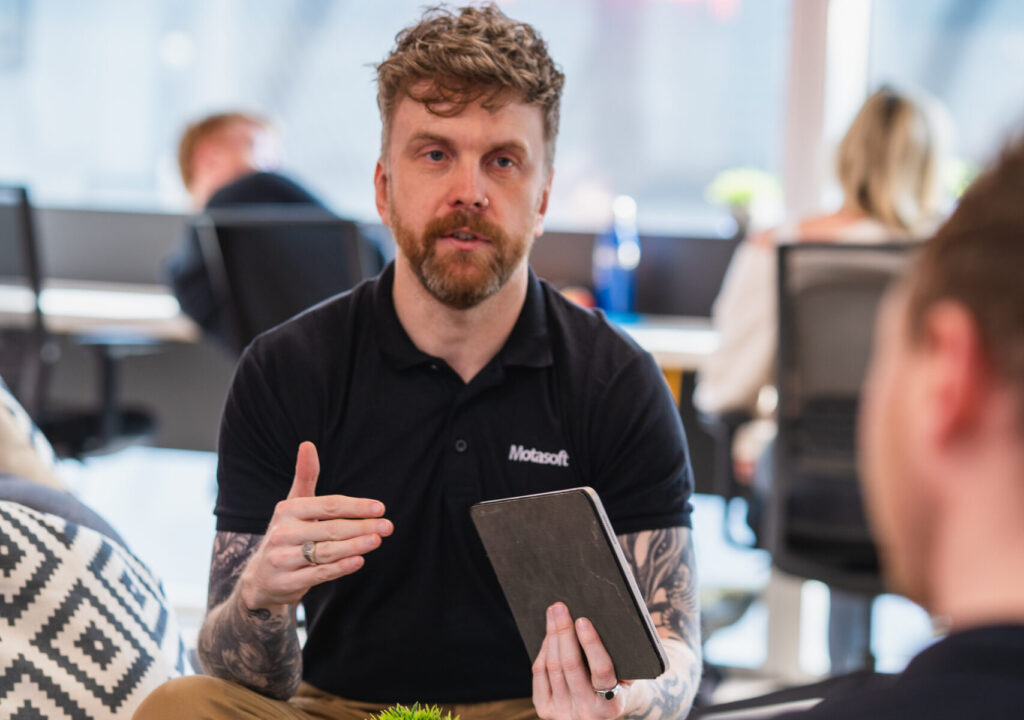
A year in the life: Andrew Burgess on Motasoft’s first 90 days inside ClearCourse.
In our last instalment, Andrew Burgess talked about why he decided to sell Motasoft. Three months in, we caught up with him again to find out what joining a software group actually feels like after you sell your software business.
What have the first few months been like since selling your software business and joining ClearCourse?
Very busy. At times it can feel a little overwhelming, if I’m honest. But we’ve been fortunate to have good people around us who are good at cutting through the noise and working out what actually needs to happen first.
Getting to grips with all the different departments, businesses, and priorities across the group has taken some getting used to. But everyone we’ve worked alongside has been really knowledgeable about their area, and they’ve been great communicators. From tech to sales and marketing, it’s been very positive.
What changed straight after the acquisition, and what stayed the same?
For most of the team, it’s genuinely been business as usual. I’ve been quite deliberate about keeping them focused on the work while the wider integration takes shape around us.
The biggest shift has probably been the financial structure. It’s way more structured than anything we’ve ever done before, which is genuinely a good thing. It gives you clarity and focus. Before, we were quite cash flow driven and it was a lighter touch. Now there are monthly reporting deadlines and a finance team with multiple responsibilities. I wouldn’t say it’s been challenging exactly, it’s just been the biggest visible difference from how we used to operate.
The meetings have also taken some adjusting to. There are more of them than we’re used to, but that’s just the difference between a twelve-person business and a 700-plus person group.
How does selling your software business affect your team?
If anything, the changes they’ve felt have been positive. Things like having a dedicated HR team, better contracts, improved perks. Things we just couldn’t have offered as a twelve-person company.
We also recently got access to better AI tooling, and that’s been a big benefit for the team.
The dev team had been using AI for a couple of years already, but the tools available through the group are a step up from what we had before, and you can see the difference in the results.
“The financial structure is way more structured than anything we’ve ever done before, which is genuinely a good thing. It gives you clarity and focus.”
What have the technical integrations looked like in practice?
We’ve been mainly focused on embedding payments, covering point of sale, pay by link, and e-commerce. We’re hoping to have them all wrapped up within the next few weeks.
After that we’ll move on to integrating with Cymba and Fetchify for SMS and postcode lookup. We are excited about the SMS capability in particular. There’s a lot on the roadmap we’re keen to start using, and it’s going to open up some real possibilities for how Motasoft users communicate with customers.
The integrations have been quite self-contained, which means the developers can just get on with it and we can see progress consistently. That’s been a good thing.
Has anything been unexpected, or come as a surprise after acquisition?
Not a great deal, honestly, and I think that’s genuinely a credit to the M&A team. They were pretty transparent and honest about what to expect during the integration process. There can be a lot coming at you, but as long as you keep the underlying priorities in focus, everything else can be put into place in time.
That’s largely how it’s played out. When you go into a deal like this, you’ll likely have heard plenty of horror stories about what can happen quickly after completion, so the fact that it’s tracking to what we were told counts for a lot.
How has your role shifted since selling the business?
There’s been a natural shift in priorities and how I spend my time. Right now a lot of it is about getting the right foundations in place within Motasoft, so we’re well set up for the next stage of growth.
What are you most excited for next?
What I’m most excited about is where Motasoft will be in twelve to eighteen months. There’s a clear vision of what the products will look like, and a lot to get through before we can get there. But I’ve always enjoyed getting things in order, ticking things off, and being able to say: right, that’s done, we can move forward. I can see what’s on the other side of this.
“Not a great deal surprised us, honestly. And I think that’s genuinely a credit to the M&A team.”
Andrew Burgess joined ClearCourse following the acquisition of Motasoft. If you’re a founder thinking about selling a software business, we’d love to have a conversation. Find out more about our acquisition approach.
